On-page SEO services improve the content and HTML of each page so it matches what people search for. Digital Meeta optimizes titles, headings, copy, internal links, images and schema, giving every page one clear topic and a stronger chance of ranking on Google.
By Muhammad Adnan Ikram, Founder and SEO Expert at Digital Meeta
Google needs clear signals about what each page covers and who it helps. When several pages compete for one term, or a page misses what searchers actually want, rankings stall even on a strong website.
We review each priority page against its target keyword, the current search results and your business goals. Then we rewrite what needs improving, keep your brand voice and make every page easier to read for both customers and search engines.
For official guidance, see the Google guidance on title links.
On-page SEO connects what your business offers with the way customers describe their problems. A well-optimized page makes its topic obvious within seconds, answers the next logical question and gives visitors a clear reason to take action.
The strongest pages combine a focused title, a helpful introduction, descriptive subheadings and specific details that only your business can provide. Examples, process steps and real answers make a page more useful than a generic competitor page.
Common on-page SEO mistakes include repeating a keyword unnaturally, using the same title on several pages, publishing thin service pages and adding images without helpful alt text. Fixing these issues improves both search visibility and conversions, because every change is made with the reader in mind.
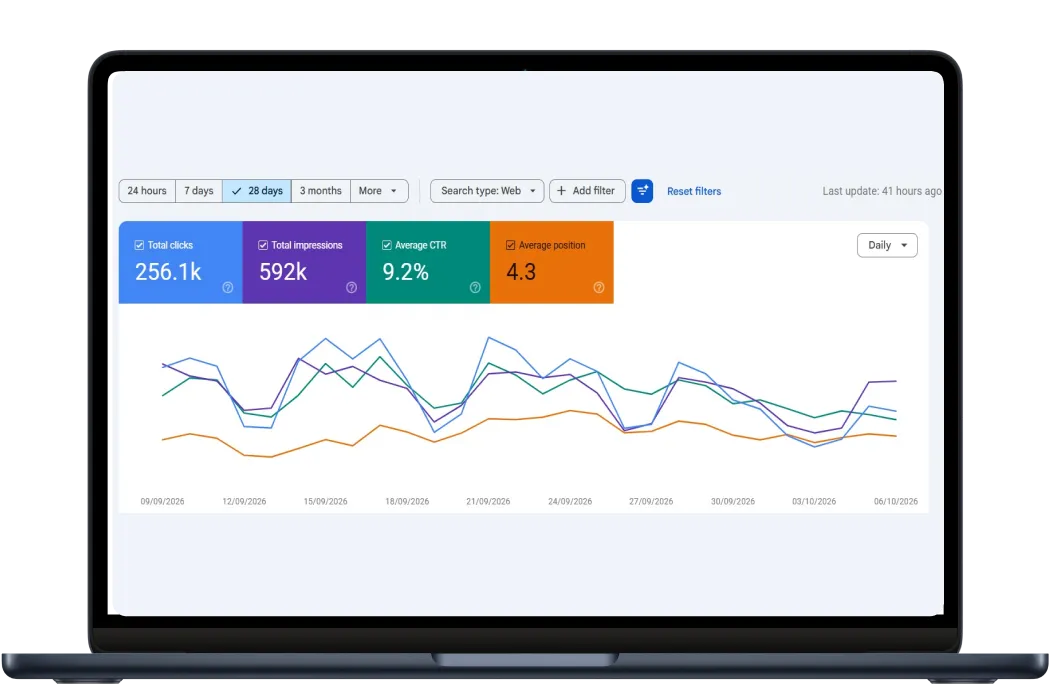
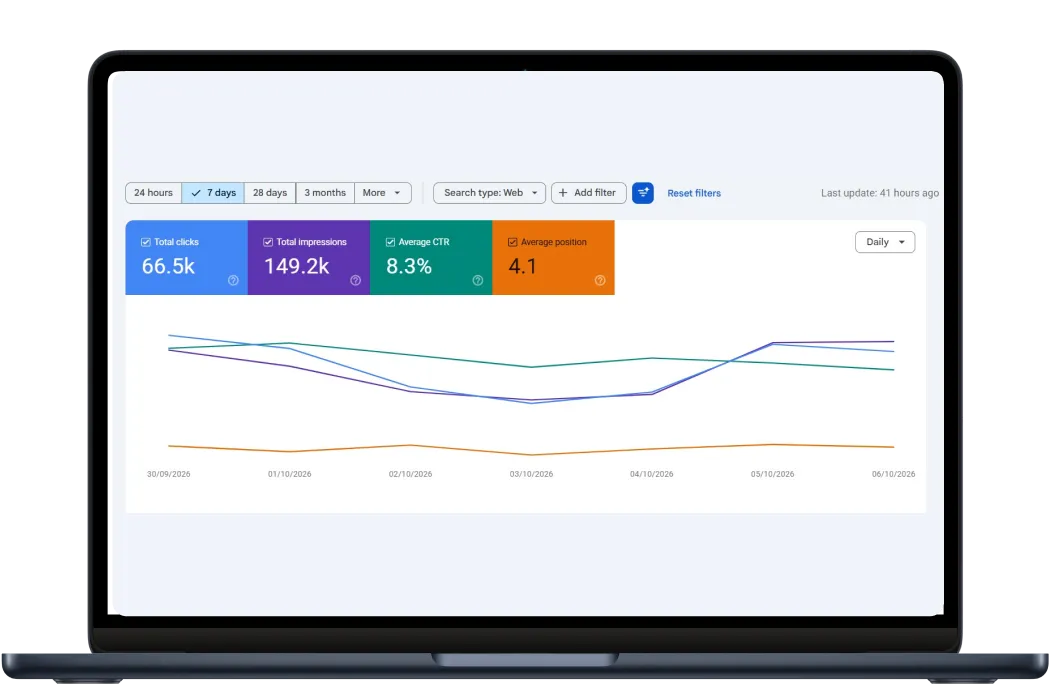
Clear, answer-first pages also strengthen answer engine optimization. See examples of our work on the results page.
Our approach
We begin by looking at what currently ranks for each target keyword. The top results show whether Google favors guides, service pages, comparisons or product listings, and that intent shapes what your page needs to be.
Then we review your page line by line. We check whether the main topic is obvious from the title and first paragraph, whether important questions are answered, and whether the page offers something a competitor’s page does not. Experience, specific details and clear explanations carry more weight than repeating a phrase.
Finally, we strengthen the page’s connections. Descriptive internal links guide visitors to the next step and help search engines understand how your services relate to each other. Each published change is then tracked, so we can see which edits improved clicks and positions.
What is included
Each important page gets one clear primary topic, which prevents keyword cannibalization.
We write click-worthy search snippets within recommended lengths.
We organize H1 to H3 headings so pages are easy to scan and understand.
We improve depth, clarity and search intent match without keyword stuffing.
We connect related pages with descriptive anchor text.
We add useful alt text, compress images and implement relevant structured data.
Common issues
Two or more pages compete for one term, so neither performs well. We merge, reposition or differentiate them.
A sales page targets a question that searchers want explained, or the reverse. We align the format with what people need.
Your page ranks but earns few clicks. Better titles and descriptions give searchers a clear reason to choose you.
Short pages leave buyers with unanswered questions. We add useful detail, proof and next steps.
Who it is for
How we work
Step 1
We learn your business and run a full SEO and website audit.
Step 2
You get a roadmap with priorities, timelines and goals.
Step 3
We fix issues, improve content, earn links and build fast sites.
Step 4
Monthly reports on rankings, traffic and leads guide the next move.
You will see a page-by-page plan with the target keyword, recommended title, content changes and internal links. Important copy is shared for your review before publication.
Pages that already rank just outside the top positions are often the fastest to respond. New pages and highly competitive keywords generally need more time and may also need authority from quality backlinks.
Related results
Related services
Keyword research services identify the words and questions your customers type into search engines.
Technical SEO services improve the parts of your website that search engines depend on, including crawling, indexing, site speed and structure.
Link building services earn backlinks from relevant, trustworthy websites to strengthen your authority in search.
FAQ
On-page SEO is the process of optimizing a page’s content, headings, title tag, meta description, internal links, images and code so it ranks for relevant searches.
On-page SEO covers changes made on your own website. Off-page SEO builds authority from outside your website, mainly through quality backlinks and mentions.
Start with the pages closest to generating leads or sales, such as service and product pages. We prioritize them using your Search Console and analytics data.
No. We keep your tone and improve clarity, structure and relevance. You review the important copy changes before they go live.
Aim for roughly 50 to 60 characters so the main message is less likely to be shortened. Put the most important words near the beginning.
There is no ideal density. Use the main term naturally in key places, then cover the topic fully with related language.
Yes, when the update adds real value. Refreshing facts, improving depth and matching current search intent can help a page regain visibility.
Search intent is the most important on-page SEO factor. A page must give searchers what they came for. Clear titles, headings, useful content, internal links and fast loading then help that page perform better.
Examples of on-page SEO include writing title tags and meta descriptions, structuring headings, improving page copy, adding internal links, writing image alt text and adding schema markup.
On-page SEO can improve rankings for low-competition terms without many backlinks. Competitive keywords usually need both strong pages and authority from quality links.
Share your website and goals. A real person reviews your search visibility and replies within one business day.
info@digitalmeeta.com
We use your details only to respond to your enquiry. Read our Privacy Policy.
Get a free review of your website and a clear plan to rank higher and win more customers.

SEO and web development that wins customers. We help businesses rank higher on Google and turn visitors into leads and sales.
Follow Us
Company
Services
Contact Us